
Tensile membrane structures: modern solutions for roofs and canopies
Modern architecture is moving in the direction of innovative, sustainable solutions. Tensile membrane structures are one of those trends, gaining ground in Poland and around the world. Lightweight, flexible and visually distinctive, membrane canopies are becoming a key element of contemporary construction projects. So what exactly are these structures, and why are they worth considering?
What is a tensile membrane structure?
A tensile membrane structure is a modern form of architecture built around lightweight, high-strength technical fabrics that span large areas as roofs or facades. The membranes themselves are made from materials such as PVC-coated polyester, PTFE-coated fibreglass or ETFE foil — each offering excellent weather resistance and considerable flexibility. Together they enable the kind of unique, futuristic architectural shapes that conventional construction simply cannot match.
Advantages of tensile membrane structures
One of the headline benefits of membrane structures is the combination of low self-weight and high strength. Compared to traditional materials such as concrete or steel, membranes are extremely lightweight, which allows architects to span very long clear distances without bulky support frames.
Another advantage is design flexibility. Architects can create canopies in almost any shape, which gives them enormous creative freedom. Membranes are also resistant to a wide range of weather conditions — strong wind, rain, snow and UV radiation.
On top of that, membrane structures are sustainable. The materials are easy to recycle, and the low weight reduces energy consumption during transport and installation. Membrane canopies fit naturally into the philosophy of sustainable construction.
Applications of tensile membrane structures
Tensile membrane structures have a very broad range of uses. They are commonly applied to stadium and sports facility roofs — see the Allianz Arena in Munich or the Millennium Dome in London. Membranes also work very well in trade fair and exhibition halls, amphitheatres and outdoor stages. Increasingly, they are also used as canopies for parking lots and other commercial spaces.
Membrane production technology
Producing architectural membranes is a complex technical process: choosing the right material, processing it correctly, and installing the finished envelope on site. Modern production methods make it possible to manufacture membranes with very specific properties tailored to a given project. Installing a tensile structure requires precision and the joint effort of architects, engineers and skilled tradespeople.
Types of tensile membrane canopies
Membrane canopies fall into a few main categories depending on their geometry and purpose. The most popular are point-supported canopies, which combine a simple form with very effective performance. Flat canopies are often used over very large areas such as exhibition halls. The most technically advanced are spatial canopies, which allow for complex three-dimensional architectural shapes.
Famous tensile membrane structures
A few internationally recognised examples are worth mentioning. The Allianz Arena in Munich is one of the most recognisable stadiums in the world. The Millennium Dome in London has served as a major culture and events venue for years. The O2 Arena is one of the largest facilities of its kind in Europe.
Tensile membranes in Poland
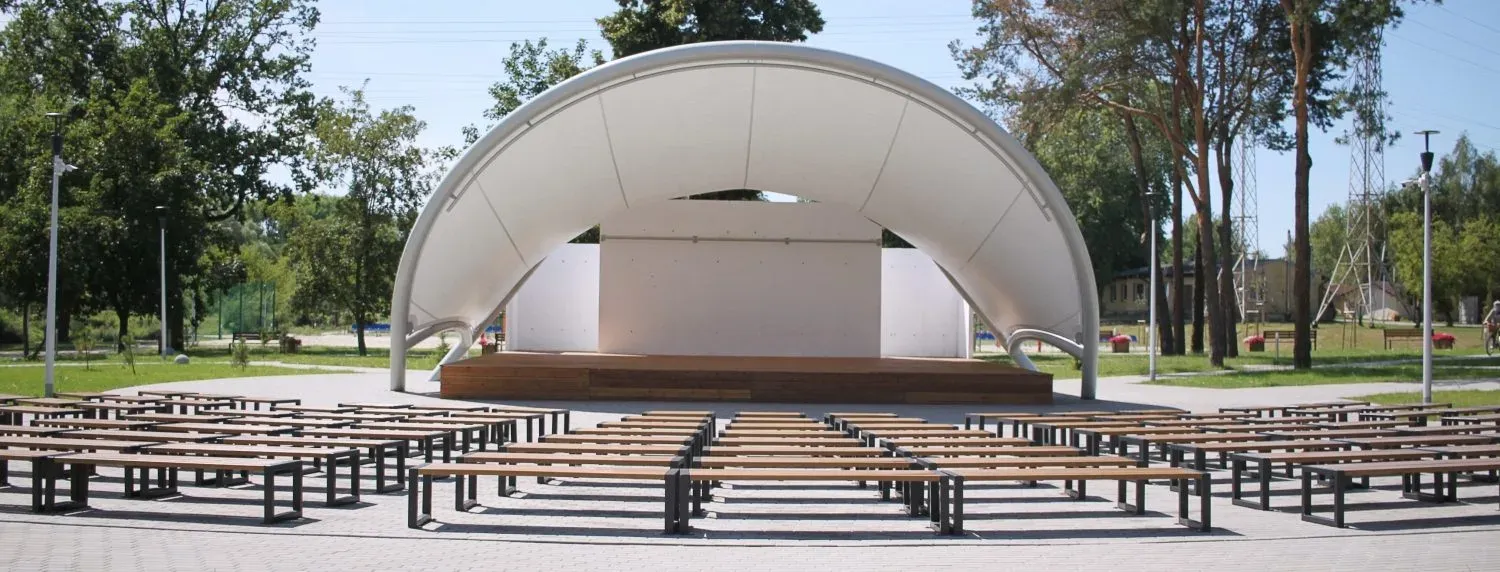
Membrane structures are now appearing more and more often in Poland too — primarily on sports facilities and in public spaces. One example is Park Kasprowicza Open Air Theatre, which we delivered ourselves. Its membrane canopy was specifically engineered for Polish climate conditions.
Cost and durability
The cost of building a tensile membrane structure depends on a range of factors: project size, choice of material, and the complexity of the structure. Despite the higher initial cost in some cases, membranes are durable and require very little maintenance, which lowers the lifetime cost of the building.
A well-built membrane has a long service life — 30 to 40 years is realistic when the envelope is properly maintained. And if damage does occur, repair is relatively straightforward and quick.
Sustainability
Tensile membrane structures are an environmentally friendly choice. The materials used to produce them are easy to recycle, which limits their environmental footprint. Membranes are also energy-efficient, contributing to lower energy consumption in the buildings they protect.
Disadvantages and challenges
Despite the long list of upsides, tensile membrane structures also have their challenges. One of the main issues is design constraint — membranes are not as universally usable as some other building materials, which can limit their application in certain projects. They are also more vulnerable to mechanical damage than steel or concrete, which makes regular maintenance important.
Comparison with conventional roofing technologies
Tensile membrane canopies have several advantages over traditional roofing. Compared to concrete or metal roofs, membranes are far lighter, which allows architects to create larger, more open spaces. They are also more flexible and more sustainable, which is an additional plus.
The planning and construction process
Planning and building a membrane structure is a complex process that involves a wide range of specialists. From concept through detailed design and on to installation — each stage requires careful planning and coordination between architects and engineers. Choosing the right materials and installation techniques is also essential.
The future of tensile membrane structures
The future of tensile membrane structures looks very promising. Technological progress is enabling ever more advanced membranes that can be applied in a growing range of fields. New materials, such as photovoltaic membranes, may significantly expand the functionality of these structures in the years ahead.
Summary
Tensile membrane structures are a modern, innovative approach to architecture. Their light weight, flexibility and sustainability make them an excellent choice for many project types. Despite a few drawbacks, the long list of upsides means it is well worth considering them — particularly for large, open spaces.