
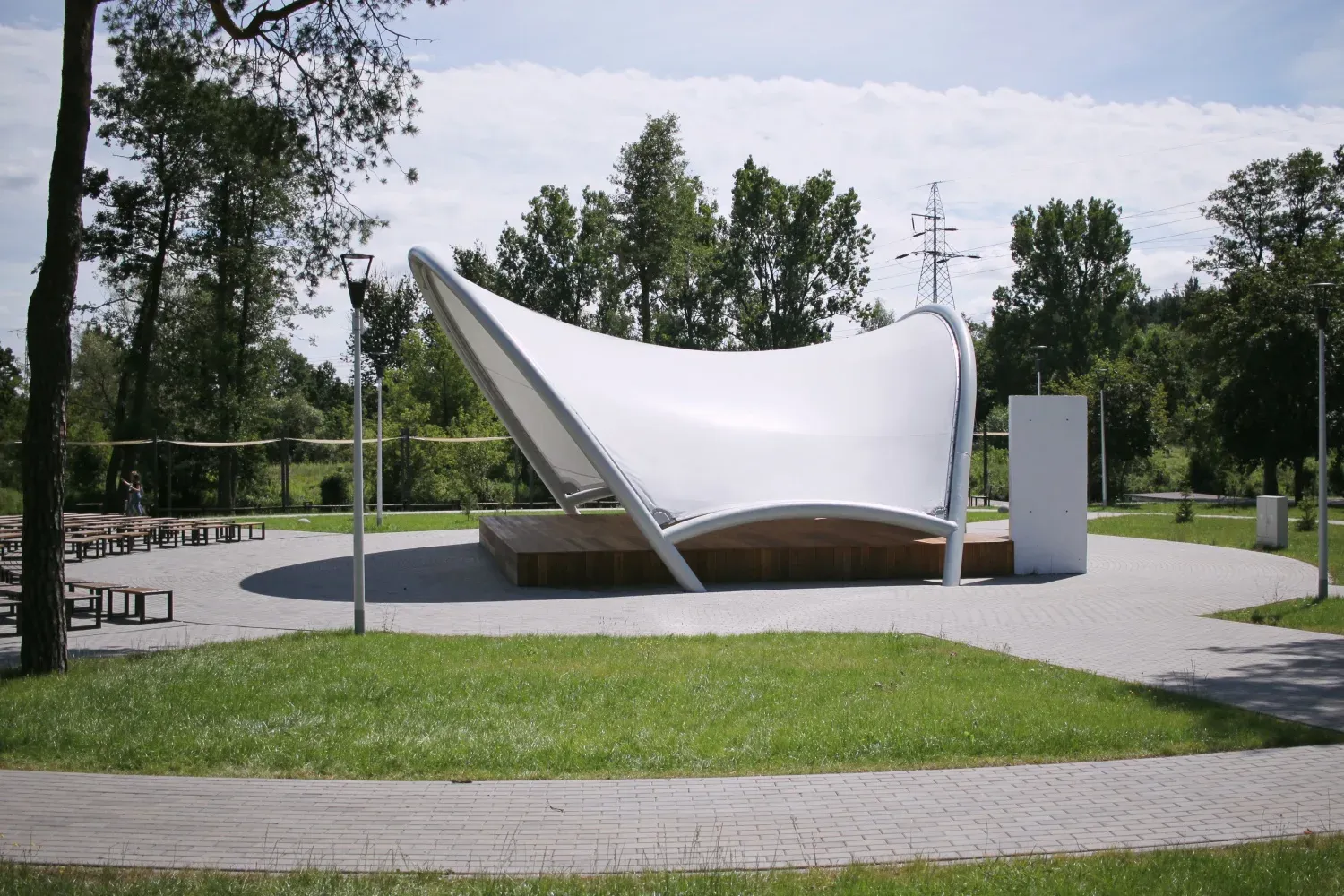
Tensile membrane roofs — types and applications
Tensile membrane canopies — often referred to simply as membrane structures — are modern and innovative architectural solutions that are gaining ground around the world. Lightweight, flexible and visually striking, they find applications across a wide range of building types, from sports stadiums to shopping centres. This article takes a closer look at what a tensile membrane canopy is, what its advantages are, and where it can be used.
Definition and characteristics
Tensile membrane canopies are building structures made of technical fabrics that are pre-tensioned over purpose-engineered support frames. The materials used are exceptionally durable and weather-resistant, which makes them an ideal choice for spaces that need protection from rain, sun and wind while remaining lightweight and visually elegant.
Types of membrane fabric
The materials used in tensile membrane canopies are advanced technical textiles, each with its own properties and applications. The most common are:
PVC-coated polyester
PVC-coated polyester is one of the most popular materials used in tensile membrane canopies. It is flexible, UV-resistant and easy to install. Its durability and economy make it a frequent choice for temporary and semi-permanent structures.
PTFE-coated fibreglass (Teflon)
PTFE-coated fibreglass — commonly known as Teflon-coated cloth — is exceptionally durable and resistant to high temperatures. It is the material of choice for structures that need a very long service life and the ability to withstand harsh environmental conditions.
ETFE foil
ETFE is a modern material being used more and more often in membrane architecture. Extremely lightweight, transparent and UV-resistant, it is an ideal choice for applications that require generous natural daylight.
What is an architectural membrane?
General concept
An architectural membrane is a thin material that acts as a barrier — typically separating two different environments. In construction and architecture, membranes are used as protective or structural layers, with different properties depending on the underlying material.
Types of membranes
Membranes can be grouped by their main properties and applications:
Mechanical membranes
Mechanical membranes are engineered to resist heavy mechanical loads such as wind and snow. They are mainly used on canopies covering large areas where exceptional durability is essential.
Chemical-resistant membranes
Chemical-resistant membranes are designed to withstand contact with aggressive chemical agents, and are used in environments where the envelope may come into contact with such substances.
Thermal membranes
Thermal membranes provide thermal insulation and are used in buildings where maintaining a stable indoor temperature is critical, such as sports halls or warehouses.
Applications of tensile membrane canopies
Tensile membrane canopies are used across a wide range of industries, building types and public spaces, thanks to their versatility and strong visual character.
Sports facilities
Stadiums are one of the most popular applications. The lightweight structure makes it possible to cover huge areas without the need for heavy and expensive materials. A good example is the tensile membrane grandstand canopy at the MOSiR Stadium in Sieradz, which combines pure functionality with a contemporary visual identity.
Sports halls also benefit. Tensile membrane canopies create large, open spaces that are protected from the weather while still being well lit by natural daylight.
Public buildings
Shopping centres often use membrane canopies to protect outdoor areas such as courtyards and plazas, while adding a strong visual character to the building.
Stations and airports
Train stations and airports frequently use membrane canopies to cover large areas — terminals, platforms — where weather protection and architectural quality are equally important.
Facades and elevations
Modern office buildings sometimes use membranes as facade and elevation elements, giving the building a unique, futuristic look. A great example is the tensile membrane facade for Nestlé Purina in Wrocław, shaped as a wave with concave and convex arcs.
In cultural and arts buildings — museums, theatres — membranes are used to create striking, inspiring forms that emphasise the modern character of the venue.
Temporary canopies
Tensile membrane canopies are also a natural fit for temporary projects. Terrace canopies are a good example — they protect outdoor spaces such as restaurant patios and private terraces from sun and rain. Light and easy to install, they can be set up quickly and removed when no longer needed. They also bring a strong visual identity to the space.
Pre-engineered canopy systems
Pre-engineered, modular canopy systems are an excellent solution for many facilities, offering both weather protection and a distinctive look. One example is the playground canopy we built in Lubliniec.
Advantages of tensile membrane canopies
Tensile membrane canopies offer a long list of advantages that make them an attractive choice in modern architecture.
Visual impact and design
Membranes make it possible to create unique, spectacular shapes that are very difficult to achieve with traditional building materials. Their translucency and flexibility allow architects to design canopies that integrate beautifully with their surroundings while maintaining comfortable natural daylight transmission.
Functionality
Tensile membrane canopies are not just attractive — they are extremely functional. They are lightweight, which makes installation easier, and at the same time very durable and resistant to a wide range of weather conditions. Thanks to these properties, membrane canopies can be used in many different climate zones.
Durability
Membrane fabrics such as PTFE and ETFE offer high resistance to UV radiation and changing weather conditions. They are also chemically resistant and remain stable across a broad temperature range. As a result, tensile membrane canopies can serve for many years without the need for frequent repairs or replacement.
Cost-efficiency
The cost of installing a tensile membrane canopy is typically lower than that of a traditional canopy made from heavy materials. The light weight of the membrane also means less massive supporting structures, which reduces the total project cost.
How to choose the right tensile membrane canopy for your project
Choosing the right tensile membrane canopy depends on several factors that are worth considering during the design phase.
Choosing the right contractor
Choosing a contractor that specialises in tensile membrane structures is critical to project success. Experienced specialists can recommend the best solutions and ensure professional installation. Reference projects to consider can be found on our tensile membrane structures page.
Examples of successful projects
Successful projects such as the tensile membrane canopy for the MOSiR stadium in Sieradz or the playground canopy in Lubliniec show how varied the applications of architectural membranes can really be. Choosing a proven contractor with a documented portfolio gives you confidence that the project will be delivered to the highest standards.
Summary
Modern tensile membrane canopies are an attractive and functional solution that is gaining popularity in contemporary architecture. Their light weight, durability and economy make them suitable for a wide range of building types — from stadiums to shopping centres. Get in touch with us and we will help you choose the right canopy for your specific needs.