
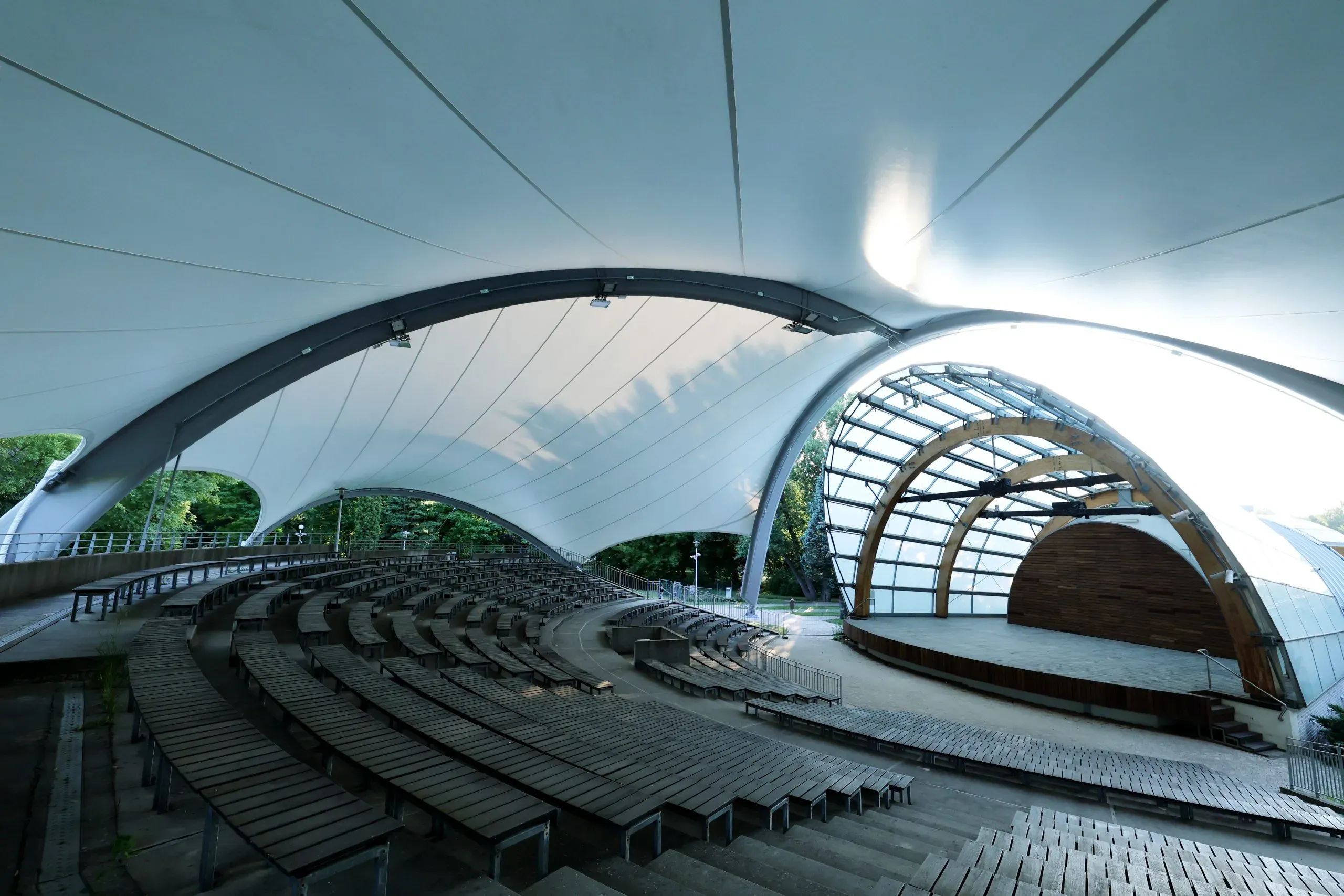
How do tensile membrane structures affect sound?
You have probably noticed how tensile membrane structures are reshaping the face of contemporary architecture. Their light weight, flowing lines and almost unlimited possibilities for shaping space inspire architects and investors around the world. When we build amphitheatres, event halls or canopies over urban squares, we choose membranes not only for their visual character or weather protection. It turns out that these modern materials also actively shape the acoustics of the space — which is critical for the comfort with which the audience experiences the event. After all, excellent sound is the foundation of a successful concert, performance or even public speech.
What are tensile membrane structures?
Put simply, tensile membrane structures are technically advanced envelopes built around a special fabric or foil tensioned over a supporting frame. Imagine a sail — the principle is similar. The right tension and a characteristic double-curved (saddle-like) shape make the membrane stable and capable of carrying loads such as wind and snow. This is how we create lightweight yet durable tensile membrane canopies with impressive spans.
The key to success is choosing the right material. In our projects we most often use three main membrane types:
-
PVC-coated polyester: A popular and versatile material offering a good price-quality ratio. It is flexible and available in a wide range of colours.
-
PTFE-coated fibreglass (Teflon-coated cloth): Glass-fibre fabrics coated with PTFE are exceptionally durable, dirt-resistant (effectively self-cleaning) and UV-stable. A solution that lasts decades.
-
ETFE foil: A transparent foil that is exceptionally lightweight and durable. It allows the creation of “glass” roofs without the weight and brittleness of traditional glass, letting plenty of natural light into the interior.
The choice of material is not only a question of aesthetics, durability or budget. Each of these materials interacts with sound differently. At Abastran we have extensive experience working with all of them, selecting the optimal solution for the specifics of each project and client expectations — including from an acoustic standpoint. The aim is for the final structure to be not just beautiful and functional, but to deliver optimal acoustic comfort as well.
How do membranes affect sound in amphitheatres?
Tensile membrane structures, by virtue of their light weight and specific construction, interact with sound waves differently from heavy traditional materials. They can reflect sound, partially absorb it or transmit it, and the final effect depends on a number of factors:
- The type of membrane
- The level of tension
- The shape of the entire structure (the most important factor)
That is why designing the acoustics of membrane-covered facilities requires special attention, particularly in places like amphitheatres where the clarity and intelligibility of sound are top priorities.
The geometry of the canopy is fundamental here. We have to be careful with concave shapes, which can act as a lens, focusing sound at one point and creating unpleasant echoes or uneven coverage of the audience. The most important geometric considerations:
- We prefer forms with anticlastic double curvature (saddle shape)
- Such forms naturally scatter sound waves
- They produce more even sound distribution across the entire space
By carefully shaping the membrane, we can even gently amplify sound and direct it towards the audience, improving intelligibility without excessive use of loudspeakers.
Another important aspect is reverberation control. Excessive reverberation time means that sounds overlap and speech becomes unintelligible. Membranes themselves are not strongly sound-absorbing, especially for low frequencies. However, by applying the right techniques we can effectively manage reverberation:
- Perforated membranes
- Multi-layer systems with additional acoustic insulation
- Careful spatial design
Designing acoustics under a membrane is a complex process. That is why we always recommend:
- Using advanced computer simulations
- Close collaboration with an experienced acoustic consultant
- Conscious decisions about materials and form
These steps allow us to minimise risk and create facilities with genuinely good acoustics.
Do membranes protect from noise? On acoustic insulation
When we think about acoustic comfort, what matters is not only the quality of sound inside the building, but also protection from external noise and limiting the sound that escapes outside. Can lightweight tensile membrane structures provide adequate acoustic insulation? The answer is yes — but it requires the right techniques.
A single layer of membrane, because of its low mass, has limited sound damping capability, particularly in the low-frequency range. Significantly better results are achieved with multi-layer systems:
- Two or three membrane layers separated by an air space
- Air space filled with sound-absorbing material (e.g. specialised mineral wool)
- Specialised acoustic membranes with a perforated structure
Bear in mind, however, that even the best materials will not work if the structure is not airtight. Potential issues:
- Leaks at the connections between the membrane and the supporting structure
- Service penetration points
- Poor installation precision
That is why we put enormous emphasis on installation precision and on dedicated sealing systems. Only this approach guarantees that the entire membrane envelope acts as an effective acoustic barrier.
Remember, every project is different. There are no off-the-shelf recipes for perfect acoustics under a membrane. The key is an individual approach, flexibility and openness to innovation. At Abastran we combine our engineering knowledge with experience from delivering complex membrane projects, always putting client needs and the quality of the final result first. If you are thinking about using a tensile membrane structure in your project and you care about excellent acoustics, get in touch — our experts will help you find the best solution.