
ETFE vs PVC — comparison of membrane materials
Contemporary architecture is going through a fascinating transformation. Traditional building materials are giving way to innovative membrane solutions. Ethylene tetrafluoroethylene (ETFE) and polyvinyl chloride (PVC) have emerged as the two dominant materials in this category, reshaping the face of modern construction. The choice between them is not simply a question of aesthetics — it has fundamental consequences for the technical parameters of the structure, its energy performance, and the long-term economics of the investment.
If you are considering which membrane material to use for your project, you need a deep understanding of the properties of both options. This article presents a comprehensive comparative analysis to help you make the optimal decision. We will look at mechanical properties, durability, applications, energy efficiency and the sustainability profile of each material.
What are ETFE and PVC? An introduction to the two main membrane materials
Ethylene tetrafluoroethylene (ETFE) is an advanced fluoropolymer that has revolutionised the design of lightweight architectural structures. This remarkable material, introduced into building applications in the 1980s, quickly earned recognition thanks to its unique combination of low weight, high strength and exceptional light transmission. To put it in perspective: ETFE foil is about 100 times lighter than the equivalent area of glass. That property makes it possible to design vast, spacious structures while placing minimal load on the supporting structure.
Polyvinyl chloride (PVC) has a much longer history in the construction industry. This versatile thermoplastic has found wide application in membrane structures thanks to its economy and good mechanical properties. A typical PVC membrane consists of a polyester fabric coated on both sides with a layer of PVC, providing the necessary strength and durability. If you are looking for a solution for a temporary or semi-permanent structure, PVC is most likely your first choice — primarily because of the favourable balance of price and quality.
At Abastran we specialise in both ETFE structures and PVC membranes, offering complete technical consulting on choosing the optimal solution for your project. Our team of experienced engineers will help you select a material that is perfectly matched to the specifics of your investment.
Mechanical properties — the key differences between ETFE and PVC
ETFE stands out for its excellent strength-to-weight ratio. The material can carry loads many times its own weight, which makes it ideal for long-span structures. ETFE is also highly elastic — the material can return to its original shape even after being stretched by 150–200%. That means your structure will be exceptionally well able to handle dynamic loads such as wind and snow, which can cause temporary deformation.
A particularly interesting property of ETFE is its ability to redistribute stress around small perforations, which prevents crack propagation. In practice this means that minor punctures do not lead to catastrophic failure of the structure — a significant safety advantage. ETFE also has excellent impact resistance: tests show that 200-micron foil can absorb impacts comparable to a tennis ball travelling at 80 km/h.
PVC membranes show somewhat different mechanical behaviour. Their tensile strength is largely determined by the reinforcing polyester fabric that forms the core of the membrane. Typical PVC membranes have good tear and puncture resistance, although they do not match ETFE in this respect. An important advantage of PVC membranes is dimensional stability under long-term load. Unlike some elastomeric materials, PVC does not exhibit significant creep (gradual deformation under constant load), which keeps the geometry of the structure stable over its full service life. That property is especially important for tensile structures, where maintaining the correct membrane prestress is critical to the stability of the entire envelope.
Durability and service life — comparing long-term performance
ETFE is exceptionally resistant to weather-driven degradation. The material retains its mechanical and optical properties even after long-term exposure to UV radiation, which is the main degradation factor for most plastics. Laboratory studies and field experience from existing installations show that ETFE foil can retain over 80% of its original mechanical properties after 25–30 years in outdoor conditions.
You can be confident in your ETFE investment regardless of location, because the material is resistant to extreme temperatures (from −200 °C to +150 °C). That makes it suitable for very different climate zones. ETFE does not become brittle in low temperatures and does not soften excessively at high temperatures, maintaining stable mechanical properties across the full operating range. It also shows excellent resistance to most chemicals — including acids, alkalis and organic solvents — which minimises the risk of degradation from atmospheric pollution or cleaning agents.
PVC membranes typically have a shorter service life than ETFE structures. Under standard operating conditions, high-quality PVC membranes can retain satisfactory properties for 15–20 years. The main factor limiting PVC durability is its sensitivity to UV radiation, which causes loss of plasticisers, leading to stiffening and embrittlement of the material. Modern PVC membranes contain advanced UV stabilisers and protective coatings that significantly extend service life, but they do not eliminate this issue completely.
It is also worth noting the susceptibility of PVC membranes to biodegradation. In humid conditions, particularly with poor ventilation, microorganisms (algae, fungi) can develop on the surface of the membranes, which not only affects appearance but can also accelerate material degradation. Regular cleaning and maintenance are essential to maintain optimal performance throughout the membrane’s service life. Fortunately, modern membranes often contain biocidal additives that significantly reduce this problem.
Architectural applications — where ETFE and PVC each shine
ETFE has found its way into the most prestigious and innovative architectural projects in the world. If you are planning a long-span structure such as an atrium, a winter garden or a stadium roof, ETFE will be an excellent choice. Its low weight reduces the mass of the supporting structure, and its transparency provides optimal natural daylight to the interior. You can draw inspiration from iconic ETFE projects such as the Allianz Arena in Munich, the Beijing Aquatics Centre and the Eden Project in Cornwall.
ETFE applications
One of the most characteristic uses of ETFE is in pneumatic cushion systems, made of two or more layers of foil with a small positive air pressure maintained between them. This solution provides excellent thermal insulation while keeping construction weight to a minimum. ETFE also works very well in building facades, where it can be used as an alternative to glass — offering better insulation parameters and more freedom in shaping architectural forms. It is particularly well suited to bioclimatic projects where controlled transmission of sunlight and heat is critical to building energy efficiency.
PVC applications
PVC dominates in the segment of temporary and semi-permanent structures. If you need an economical solution for a tent hall, an exhibition pavilion or an event canopy, PVC membranes will be an ideal choice. Thanks to their ease of installation, PVC membranes are the standard material for tent structures with very varied uses — from industrial warehouses through sports facilities to stage and grandstand canopies. The material also performs well on stadium grandstand canopies, where the opacity of PVC can actually be an advantage by protecting spectators from direct sun.
PVC membranes are also widely used in tensile architecture, where the prestressed membrane forms a self-supporting spatial structure. Thanks to the ability to shape and tension the fabric precisely, PVC membranes make it possible to create dynamic, sculptural forms that combine structural and visual roles. You will find such solutions on canopies for public spaces, parking lots, building entrances and recreational areas, where the goal goes beyond weather protection — the structure is also a distinctive architectural element.
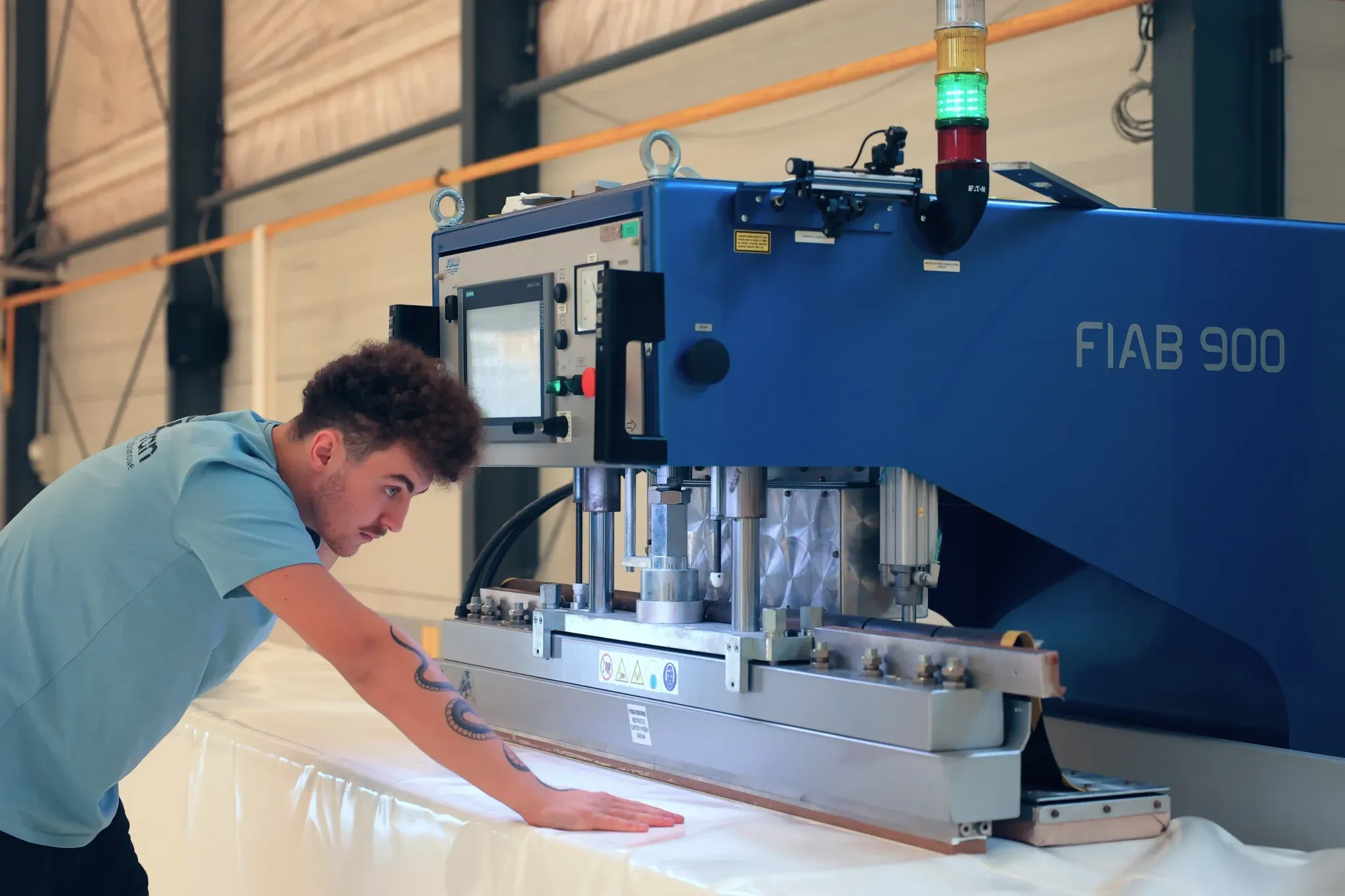
At Abastran we deliver complete projects using both ETFE technology and PVC membranes. Our offering covers the full scope — from design concept through structural optimisation to professional PVC welding and installation. If you are considering using one of these innovative materials in your project, get in touch with us to discuss the best technical solution for your investment.
How to make the optimal choice — decision criteria for investors and designers
The choice between ETFE and PVC should always be tailored to the specific requirements of your project and your expectations. The key factors to consider in your decision-making process include:
- The planned service life of the structure
- The available budget
- Light transmission requirements
- Local climate conditions
An analysis of the function and purpose of the building is fundamental to choosing the optimal material. For spaces that need maximum natural daylight — winter gardens, atriums, sports facilities — ETFE with its exceptional light transmission will usually be the better choice. For warehouse, industrial or temporary structures, where economics and ease of installation are the priority, PVC membranes are often the more rational solution.
At Abastran we offer comprehensive consulting on choosing the optimal membrane material for your project. Our team of specialists will help you analyse all the technical, economic and operational factors so that we can propose a solution perfectly matched to your needs. Get in touch with us — we are happy to discuss the details of your project and find the best structural solution.