
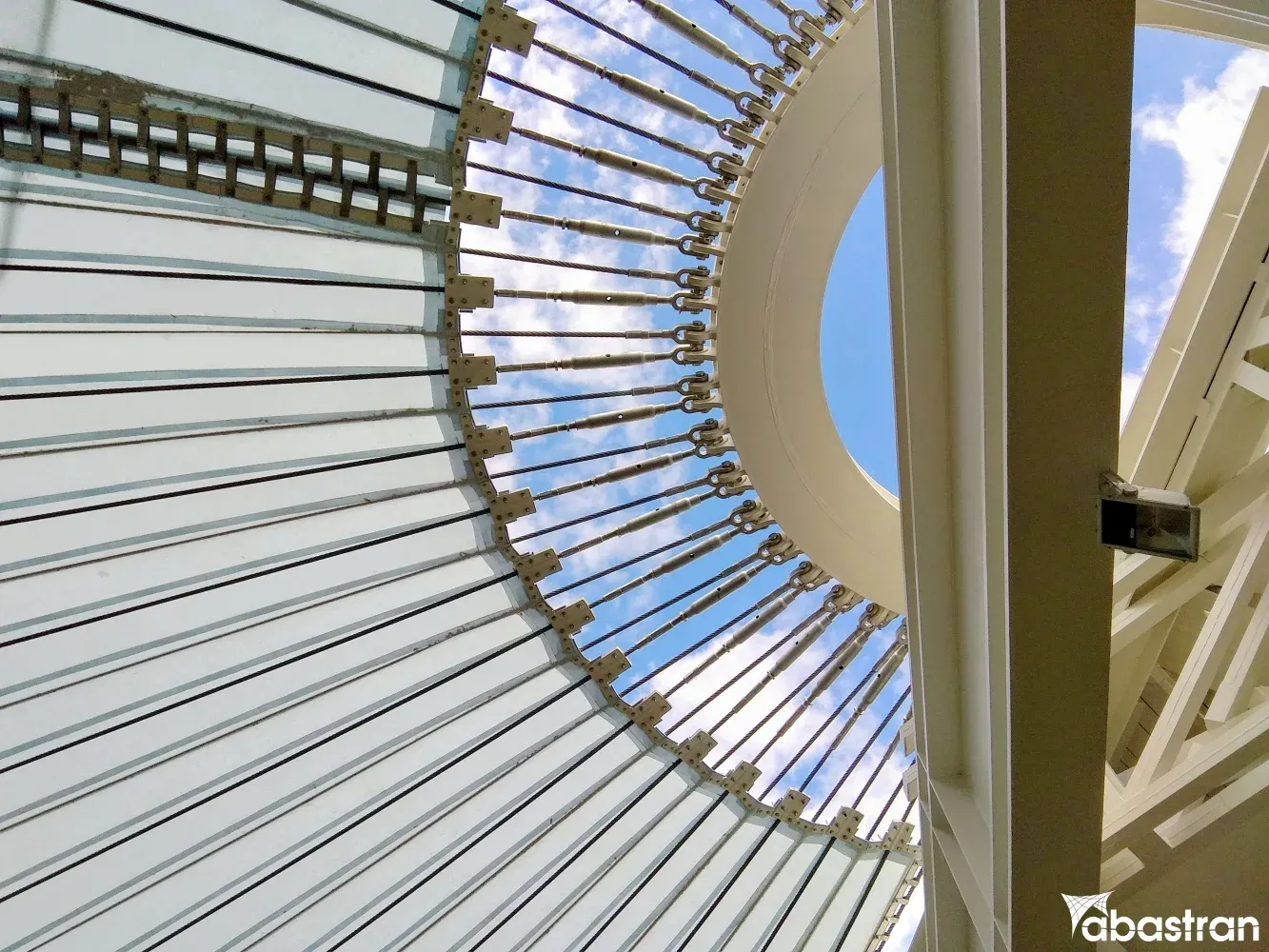
Damaged membrane — how to repair it?
Architectural membranes are the working envelope of every tensile membrane structure and tent hall cover. They protect the structure from rain, wind, snow and UV radiation, and they give the building its visual identity. When a membrane is damaged, the entire facility is affected — which is why every operator needs to know how a fabric envelope can be repaired effectively. This article walks through the most common causes of damage, the proven repair methods, and the situations in which full replacement is the only sensible option.
Why architectural membranes matter
Modern membrane structures and tent halls keep getting more popular. They are lightweight, fast to install, and they let architects build shapes that conventional construction cannot match. The fabric itself is the central element. The materials we use — typically PVC-coated polyester or PTFE-coated fibreglass — provide reliable protection against rain, snow, wind and ultraviolet radiation.
A well-engineered membrane envelope creates bright, spacious interiors while shielding them from the outdoor environment. That makes membranes the natural choice for sports halls, warehouses, riding arenas and amphitheatre canopies — anywhere a long clear span and a fast build are critical.
What damage actually means for an operator
Even minor damage can break the membrane’s protective function. A pinhole or a hairline tear lets rainwater into the building, which leads to dampness, corrosion of structural elements and damaged stock. Once water finds a path inside, repair costs escalate quickly.
Mechanical damage — tears, abrasion, punctures — also weakens the fabric mechanically. Once weakened, the membrane is more vulnerable to further damage. In an extreme scenario, strong wind can rip an already compromised envelope wide open. That puts people at risk and can trigger significant losses for the owner.
The most common types of membrane damage
Mechanical damage from external sources
Even the best membranes are exposed to mechanical impact. Branches blown by strong wind, hailstones, falling debris and acts of vandalism are all realistic threats over the lifetime of a structure.
Damage caused by sharp tools during maintenance work is also surprisingly common. A small cut may look harmless but it tends to grow with time, especially under wind load — and what started as a minor issue becomes a serious failure within a single season.
Material wear from UV, weather and ageing
Long-term exposure to UV radiation, temperature swings, rainfall and air pollution all contribute to slow material wear. After many years of service the membrane begins to lose elasticity, becomes brittle, and develops micro-cracks under load.
Material ageing is unavoidable, but it can be slowed down significantly with regular inspections and maintenance. Catching the early symptoms of wear gives you time to act before a small problem turns into a major one.
Methods of repairing damaged membranes
Field repairs: tapes and patches
For small tears, abrasions and pinholes, temporary methods are often the right answer. Self-adhesive repair tapes are the most popular — they bond well to PVC and seal small openings reliably for a season or two.
A patch is the next step up: a piece of identical membrane material is bonded or welded over the damaged area. Field repairs of this kind buy you time, but they should always be treated as temporary. They do not restore the full strength or watertightness of the original envelope.
Professional repairs: PVC welding, PTFE fabrication, CNC cutting
For a durable, clean repair, professional methods are the right choice. PVC welding joins membrane material using heat and pressure, creating a permanent, watertight seam that matches the strength of the original envelope.
PTFE fabrication covers cutting, sewing and welding of PTFE-coated fibreglass — the material used on the most demanding architectural projects. For repairs, it lets us prepare a patch that fits the damaged area exactly. CNC plotter cutting then ensures the patch geometry is precise to within a millimetre. The result is a repair that is as strong and as good-looking as the original. Abastran operates a fully equipped fabrication workshop, so even complex projects can be handled in-house.
Why regular inspection and maintenance matter
Routine inspection and maintenance are the single most cost-effective way to keep a membrane envelope in good condition. We recommend at least one full inspection per year, and more often if the structure is exposed to harsh conditions or heavy use. A maintenance schedule that fits the specific facility lets you spot problems early — before they require an emergency intervention.
Service and maintenance offered by Abastran
Abastran has decades of experience in operating, maintaining and repairing tensile membrane structures and tent hall covers. Our specialists carry out detailed inspections, assess the technical condition of the fabric, and identify any damage that needs addressing.
Our service offering includes membrane cleaning, removing minor damage, and full professional repairs using methods such as PVC welding and PTFE fabrication. The in-house workshop, including CNC cutting capability, lets us prepare patches that match the damaged area exactly.
When does the membrane need to be fully replaced?
Sometimes a repair simply does not make sense. That is the case when damage is too extensive, when the fabric is too far along in its service life, or when the cost of the repair approaches the cost of a new envelope.
The decision to replace a membrane should always be based on a thorough technical assessment. Working with experienced specialists is the best way to get an honest evaluation of the damage and a clear recommendation on the best path forward.
How Abastran replaces a tent hall cover
Abastran offers a complete replacement service for tent hall membrane envelopes. The process starts with a full survey of the building and an assessment of the supporting structure. Based on that survey we design the new cover, taking into account the client’s specific needs and the technical particularities of the structure.
The membrane is then produced in our workshop from high-quality material, using modern processes such as PVC welding and PTFE fabrication. Once the new envelope is ready, an experienced installation team fits it on site. The whole process is run efficiently and to the highest safety standards, and all work is covered by a warranty.
If you need professional membrane repair or maintenance for your structure, contact us — we will be happy to help.